.svg)
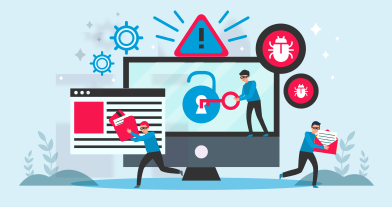
Ransomware attacks are among the most disruptive forms of cybercrime, locking businesses out of their own data and demanding ransom for its release. Organizations of all sizes are vulnerable, and responding effectively is what separates a contained incident from a prolonged crisis.
This guide walks through practical steps to take after a ransomware incident, drawing on recommendations from trusted industry sources like the National Institute of Standards and Technology (NIST) and other government agencies. Following best practices will help your organization recover while also reducing the likelihood of future attacks.
Understanding Ransomware: How It Works
Ransomware is a type of malware that encrypts your files, rendering them inaccessible. The attackers then demand payment (typically in cryptocurrency) in exchange for a decryption key. According to a 2023 report by the U.S. Cybersecurity & Infrastructure Security Agency (CISA), ransomware incidents have grown exponentially in both volume and sophistication.
Best Practice Tip
The NIST Cybersecurity Framework (CSF) advises organizations to categorize ransomware incidents as high-priority cybersecurity events and recommends using incident response plans to deal with them effectively.
Immediate Steps to Take During a Ransomware Attack
If your organization experiences a ransomware attack, acting quickly is critical. Following a clear response plan will reduce downtime and limit damage. Here is what you should do:
- Disconnect Affected Devices: The NIST Incident Response Guide (SP 800-61 Rev. 2) recommends immediately isolating any infected systems from the network. This helps to prevent the ransomware from spreading to other devices or servers.
- Avoid Paying the Ransom: Law enforcement agencies, including the FBI, strongly advise against paying the ransom. Paying does not guarantee data recovery, and it could encourage future attacks. Instead, focus on data recovery through backups.
- Notify IT and Security Teams or a Professional Ransomware Response Team: Communication is key in incident response. Ensure your IT and security teams are informed of the incident and begin coordinating their efforts to mitigate the damage. The CISA advises creating a detailed timeline of the attack for future reference.
- Engage an Incident Response Plan: If your organization follows NIST's recommendations for Incident Response, now is the time to activate it. This plan should include steps for containment, eradication, and recovery. If your organization does not have a formal incident response plan, consult the NIST CSF to develop one for future use.
Ransomware Recovery Best Practices: Data Restoration and System Repair
Once the ransomware attack is contained, the next step is to focus on recovery. The NIST SP 800-184 Guide for Cybersecurity Event Recovery provides guidance on how to handle recovery efforts:
- Backup Recovery: If your organization has robust backup systems in place, restoring data from a clean backup is often the fastest way to recover. The NIST CSF recommends testing backup systems regularly to ensure they are functioning correctly. If backups are compromised, consult with recovery specialists to explore other options.
- Forensic Analysis: Conducting a forensic analysis of the ransomware incident helps identify how the attack occurred and whether the threat persists in your environment. According to CISA's Ransomware Guide, it is essential to assess all affected systems and remove any residual malware.
- Eradication of Malware: Once the threat has been identified, remove the malware from all infected systems. NIST SP 800-61 highlights that this process should be handled carefully to avoid damaging files or systems during malware removal.
- System Patching and Updates: Ensure that all systems are updated with the latest security patches. Unpatched vulnerabilities are one of the most common entry points for ransomware. The CISA Cyber Hygiene Services offer tools and guidance for improving patch management.
- Installation of an Endpoint Detection and Response (EDR) Solution: Implementing a reputable EDR solution is crucial for detecting and responding to ransomware and other malicious activity in real time. EDR solutions continuously monitor endpoints, such as desktops, laptops, and servers, and provide advanced threat detection, allowing security teams to respond before damage occurs. Both NIST and CCCS recommend EDR solutions as part of a comprehensive cybersecurity defense, ensuring that threats are quickly identified and neutralized.
Post-Incident Recovery: Strengthening Security for the Future
Recovering from a ransomware incident is only half the battle. Once your systems are restored, it is crucial to assess how the attack happened and take steps to prevent future incidents. Industry frameworks like NIST, CCCS, ISO 27001, and CISA provide extensive guidance on improving cybersecurity resilience.
- Conduct a Full Security Assessment: A post-incident security assessment will help identify the vulnerabilities that allowed the ransomware to infiltrate your systems. The CCCS recommends that organizations conduct regular security audits to strengthen defenses. Both NIST SP 800-53 and ISO 27001 provide detailed guidelines for conducting thorough security assessments.
- Implement Network Segmentation: Segmenting your network helps limit the spread of ransomware and other malware in the event of future attacks. CCCS advises network segmentation as a critical component of an organization's security architecture.
- Enhance Backup Strategies: According to NIST SP 800-184, maintaining offline backups that are not accessible to ransomware is essential. CCCS recommends a 3-2-1 backup rule (3 copies of your data, on 2 different media, with 1 stored off-site) to ensure data recovery in the event of an attack.
- Multi-Factor Authentication (MFA): Strengthen your defenses by implementing MFA across all critical systems. This reduces the risk of unauthorized access, even if credentials are compromised during a ransomware attack.
- Security Awareness Training: Many ransomware attacks begin with phishing emails. Both CCCS and CISA stress the importance of regular employee training to help staff recognize phishing and other social engineering threats.
- Ongoing Monitoring and Threat Detection: Implement continuous monitoring and detection capabilities to identify threats before they escalate. CCCS recommends advanced tools like Endpoint Detection and Response (EDR) to monitor for suspicious activity across your network and endpoints.
Conclusion: Preparing for the Future
Ransomware attacks can be devastating, but by following best practices from industry standards like NIST, CCCS, and CISA, you can effectively recover and strengthen your defenses against future threats. Implementing a solid incident response plan, conducting regular security assessments, and maintaining strong cybersecurity practices will greatly reduce your risk.
Key Insight: The Real Value Is in Preparation
Organizations that build an effective security program before an incident occurs recover faster, lose less data, and face fewer regulatory consequences. The incident response plan is not a document you write during a crisis. It is something you build, test, and refine as part of your ongoing security operations.
For more detailed guidance, you can refer to the following resources:
Need Help Building Your Incident Response Plan?
Our assessment identifies gaps in your security program, including incident response readiness.
FAQs About Ransomware
Should I pay the ransom if my business is attacked?
According to CISA, FBI, and CCCS, paying the ransom is not recommended. It does not guarantee data recovery and encourages further attacks. Instead, focus on recovering through backups and professional ransomware response services.
How can I protect my business from ransomware in the future?
Key practices include regular backups, multi-factor authentication, employee training, and implementing network segmentation to limit the damage caused by ransomware.
What are the first steps to take after a ransomware attack?
Immediately isolate affected systems, notify key stakeholders, and engage your incident response plan to contain the damage and begin recovery.
How does an effective security program reduce ransomware risk?
An effective security program integrates controls like endpoint detection, network segmentation, patch management, and backup testing into daily operations. When these controls run continuously rather than as periodic checks, the organization catches vulnerabilities before attackers can exploit them and recovers faster when incidents do occur.
Build an Effective Security Program First
Ransomware readiness starts with the right security foundation. Let's assess where you stand.
Ready to Start Your Compliance Journey?
Get a clear, actionable roadmap with our readiness assessment.
About the Author

Ali Aleali, CISSP, CCSP
Co-Founder & Principal Consultant, Truvo Cyber
Former security architect for Bank of Canada and Payments Canada. 20+ years building compliance programs for critical infrastructure.