.svg)

SOC 2: A Valuable Tool for Assessors
I have noticed that it’s become trendy to criticize SOC 2 compliance in threads, claiming it is ineffective or superficial. These claims often aim to generate clicks, comments, or promote rival products, rather than offering genuine insights. While skepticism is healthy, dismissing SOC 2 outright reflects a lack of broader analysis and understanding of what the report helps achieve.
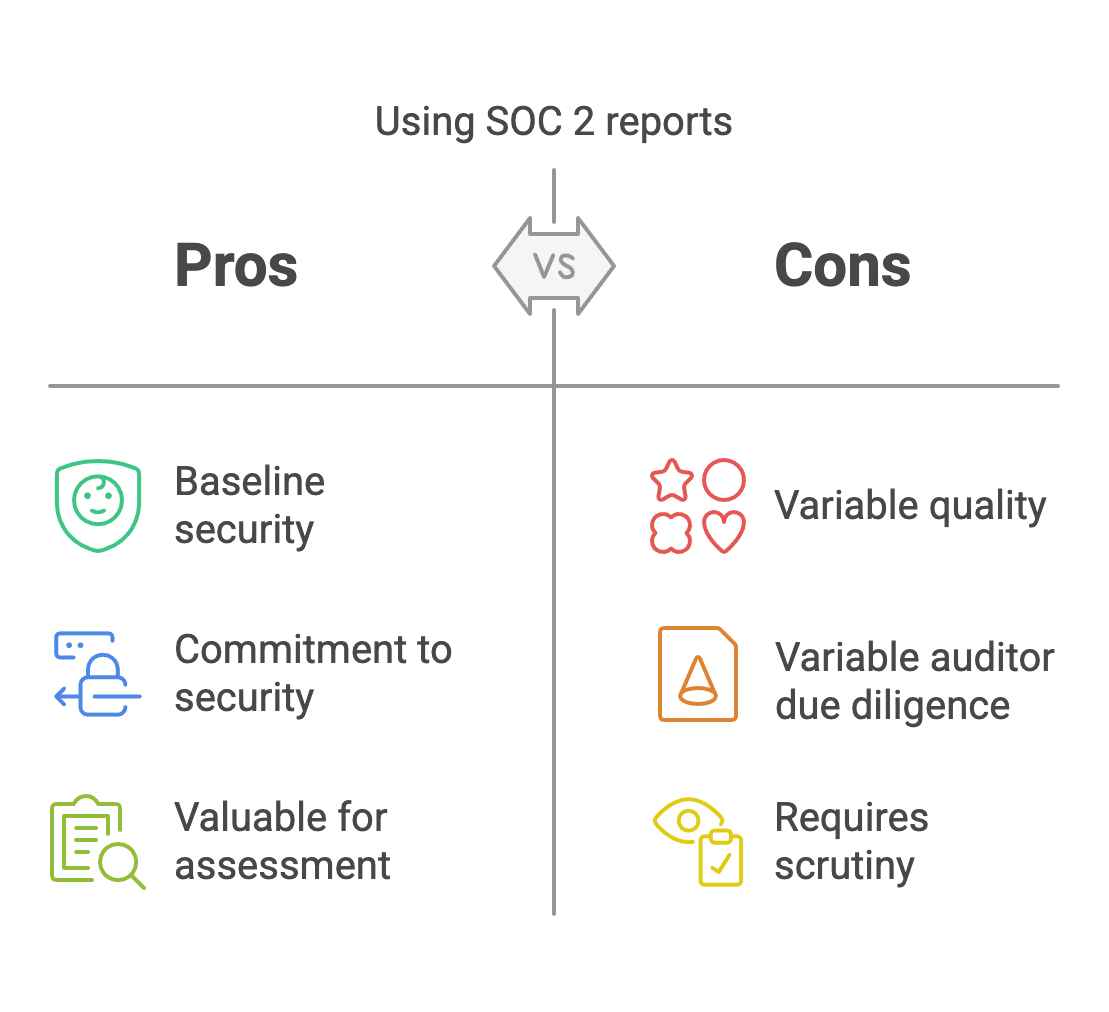
Having evaluated hundreds of vendors and built Third-Party Risk Management (TPRM) programs for organizations like the Central Bank of Canada and private enterprises, I can confidently say SOC 2 is an assessor’s ally. When a vendor presents a SOC 2 report, it demonstrates an essential baseline of security controls, and when paired with additional artifacts like penetration test reports, white papers, policies, and other certifications, it signals a commitment to security.
Dismissing SOC 2 as useless is akin to dismissing penetration test reports. Both can vary in quality based on the professional conducting them and the scope of the assessment. A superficial SOC 2 report might reflect poorly designed controls or an inexperienced auditor. However, it’s the assessor’s job to scrutinize the report, challenge its findings, and gauge the true maturity of the vendor’s security program.
Driving Improvement Through Tough Questions
When assessors push vendors to go beyond the bare minimum of controls, they encourage improvement in security of the service provider. For example, if an assessor identifies a SOC 2 report as superficial or notes that the auditor lacks credibility, they can demand broader controls or suggest a more reputable auditor. Vendors that take this feedback seriously often improve their security posture and strive for higher-quality reports, thereby raising the industry baseline.
The Role of Trust Centers
At its core, the effectiveness of any security program—SOC 2 included—depends on an organization’s willingness to prioritize security. Companies with engaged boards and stakeholders that understand the value of security investments will naturally build stronger programs. Similarly, when clients demand robust security evidence, vendors are motivated to meet those expectations to not lose a sale.
SOC 2: A Tool, Not a Silver Bullet
Proving security is undeniably hard. SOC 2 compliance report is a tool—not a silver bullet—to help organizations showcase their efforts to protect customer data, critical services, and reputation. If your organization has implemented meaningful controls and takes security seriously, it will reflect in the depth and quality of your SOC 2 report. Conversely, a superficial program will produce a shallow report that fails under scrutiny.
Don’t Blame the Tool
Ultimately, blaming SOC 2 for bad security is misguided. The problem lies not in the tool but in its application. Poor outcomes often stem from insufficient effort or understanding, not the framework itself. Organizations that take security seriously can use SOC 2 as the foundation to build a well-rounded security program, promote trust, demonstrate accountability, and drive continuous improvement in their security posture.